
Industrial Automation: Transforming Industries with Smart Technology
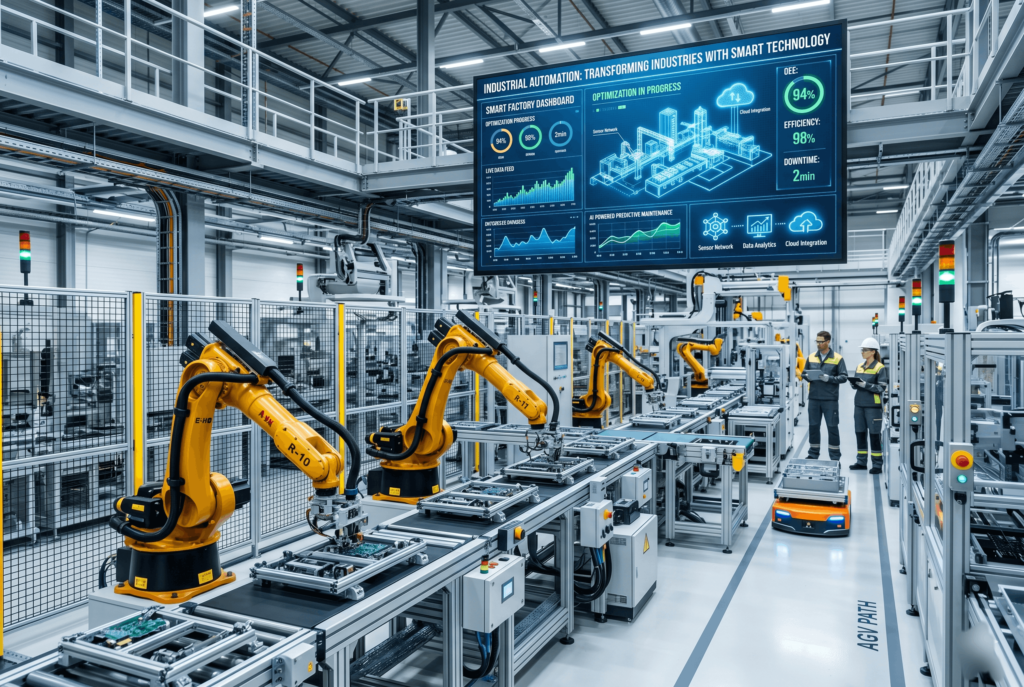
The industrial world is changing rapidly with the rise of advanced technologies and intelligent systems. Businesses today are searching for smarter ways to improve productivity, reduce costs, and maintain high-quality standards. In this modern era, Industrial Automation: Transforming Industries with Smart Technology has become one of the most important developments driving industrial growth and innovation. Automation is helping industries become faster, safer, and more efficient while reducing dependence on manual operations.
From manufacturing plants to energy industries, automation systems are improving industrial performance in remarkable ways. Smart technologies are now playing a major role in shaping the future of industries worldwide.
Understanding Industrial Automation
Industrial automation refers to the use of advanced control systems, machinery, robotics, and software technologies to automate industrial processes. Instead of relying completely on human effort, industries use automated systems to manage production, monitor machines, and improve operational efficiency.
The concept of Industrial Automation: Transforming Industries with Smart Technology focuses on making industrial operations more intelligent and reliable. Technologies such as PLC, SCADA, HMI, sensors, and robotics are commonly used in modern automation systems. These technologies help industries perform tasks with greater accuracy and speed while minimizing human error.
Automation has become essential in industries such as automobile manufacturing, food processing, pharmaceuticals, oil and gas, and power generation because it improves productivity and operational consistency.
Smart Technology in Modern Industries
Smart technology is the backbone of industrial automation. Modern industries are using Artificial Intelligence (AI), Internet of Things (IoT), cloud computing, and machine learning to create connected and intelligent production environments.
The idea behind Industrial Automation: Transforming Industries with Smart Technology is to allow machines and systems to communicate, collect data, and make decisions automatically. Smart sensors monitor industrial equipment in real time and help businesses identify problems before major failures occur.
These advanced technologies improve machine performance, reduce downtime, and help industries optimize production processes. As industries continue adopting digital transformation strategies, smart automation systems are becoming increasingly important for long-term success.
Improving Productivity and Efficiency
One of the biggest benefits of industrial automation is improved productivity. Automated machines can operate continuously without fatigue, allowing industries to achieve faster production and better output. This helps companies meet customer demands more efficiently.
Industrial Automation: Transforming Industries with Smart Technology also improves operational efficiency by reducing production delays and minimizing material waste. Automated systems perform repetitive tasks with high precision, ensuring better product quality and consistency.
Industries that invest in automation technologies can reduce operational costs while increasing overall production performance. This creates a strong competitive advantage in today’s fast-moving industrial market.
Workplace Safety and Reliability
Industrial environments often involve dangerous tasks and heavy machinery. Automation technology helps improve workplace safety by reducing human involvement in risky operations. Robots and automated systems can handle hazardous tasks more safely and accurately.
The concept of Industrial Automation: Transforming Industries with Smart Technology also supports better reliability in industrial operations. Automated systems can monitor machine conditions continuously and provide alerts when maintenance is required. This prevents unexpected breakdowns and improves the overall lifespan of industrial equipment.
Safer working environments and reliable production systems are major reasons why industries are rapidly adopting automation technologies.
Future of Industrial Automation
The future of industrial automation is highly promising. Industries worldwide are moving toward Industry 4.0, where automation, robotics, AI, and IoT work together to create smart factories and intelligent production systems.
The vision of Industrial Automation: Transforming Industries with Smart Technology will continue expanding as businesses seek innovative solutions for better efficiency and sustainability. Future industries will rely heavily on data-driven systems capable of making real-time decisions and optimizing industrial operations automatically.
Automation technology will also create exciting career opportunities for engineers and technical professionals who specialize in industrial control systems and smart manufacturing technologies.
Conclusion
Industrial Automation: Transforming Industries with Smart Technology is revolutionizing the industrial sector by improving productivity, efficiency, safety, and operational performance. Smart automation systems are helping industries reduce costs, increase production quality, and adapt to the demands of modern manufacturing.
With the rapid growth of AI, robotics, IoT, and intelligent control systems, industrial automation will continue shaping the future of industries worldwide. Businesses that embrace automation technologies today are preparing for a smarter, more efficient, and more competitive future in the rapidly evolving industrial world.
Latest Post
-
 Is Industrial Automation a Good Career Choice in 2026?
 -
 Best Courses After ITI & Diploma – Career-Oriented Automation Courses
 -
 Best Course After B.Tech In Kerala : Top Career-Oriented Courses for Engineering Graduates
 -
 Industrial Automation: Transforming Industries with Smart Technology
 -
 Marine Electrical & Instrumentation Course in Kerala
We are a group of Experienced passionate professionals spent many years working in the marine, oil and gas, petrochemical, and energy sectors.
Other Pages
Quick Links
Copyright © 2023 Voyage Institute Of Technology Pvt Ltd, All rights reserved.